INQUIRY
Leave Your Message
0%

In the fast-changing world of RF tech, let’s be honest—Rf Dividers are pretty much the unsung heroes. They might not always be in the spotlight, but they’re crucial for splitting and managing signals, which is key for boosting performance whether you're working in telecom or aerospace. If you really want to nail your RF systems — like, make them more efficient and reliable — understanding the different types of Rf Dividers and what makes each one special is a must.

As we dive into this topic, I’ll walk you through some of the most common Rf Divider types out there, pointing out their unique features and where they’re used. From resistive dividers to Wilkinson dividers, each has its own perks suited to specific needs, whether it’s for commercial gadgets or military gear. Getting familiar with these main types can really help your projects not just look good on paper but also perform smoothly in real-world situations.
Top Rf Divider Types You Should Know for Optimal Performance

Overview of RF Dividers and Their Importance in Communication

Top Rf Divider Types You Should Know for Optimal Performance

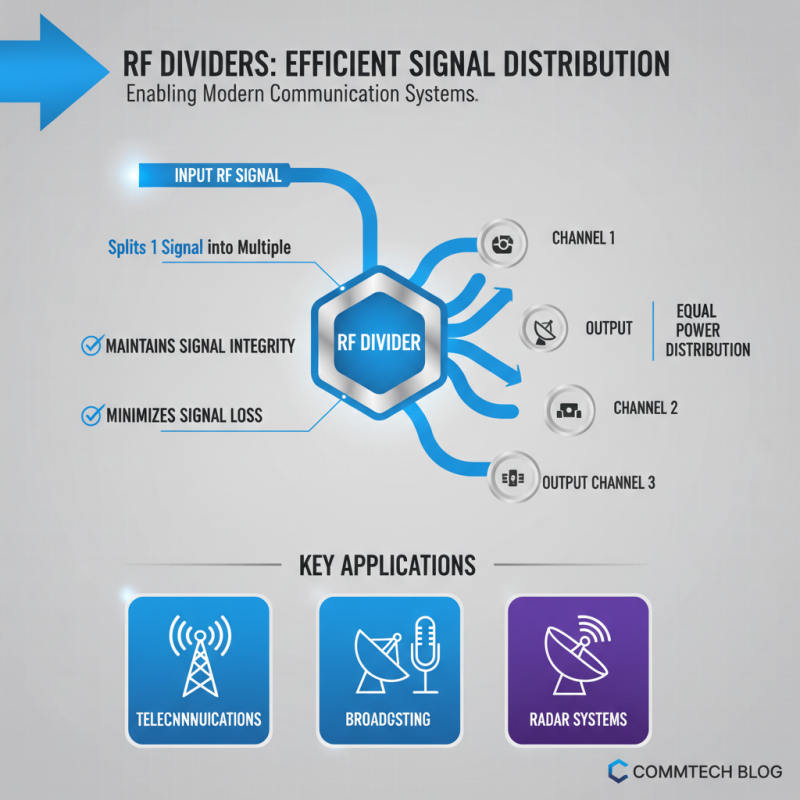
Rf Dividers play a crucial role in modern communication systems by enabling efficient signal distribution across multiple channels. These devices allow a single input RF signal to be split into several outputs, which maintains signal integrity while minimizing signal loss. By effectively dividing power among different pathways, Rf Dividers facilitate the management of signal strength and quality, making them essential in applications like telecommunications, broadcasting, and radar systems.

The importance of Rf Dividers is further underscored by their ability to enhance system performance. In high-frequency applications, maintaining a balanced load and preventing reflections are vital to ensure optimal function. Rf Dividers come in various types, such as resistive, active, and hybrid dividers, each offering specific advantages depending on the application requirements. Understanding these types helps engineers design more robust systems that can handle the complexities of modern communication, ensuring reliable and efficient transmission of information.

Types of RF Dividers: A Comprehensive Classification

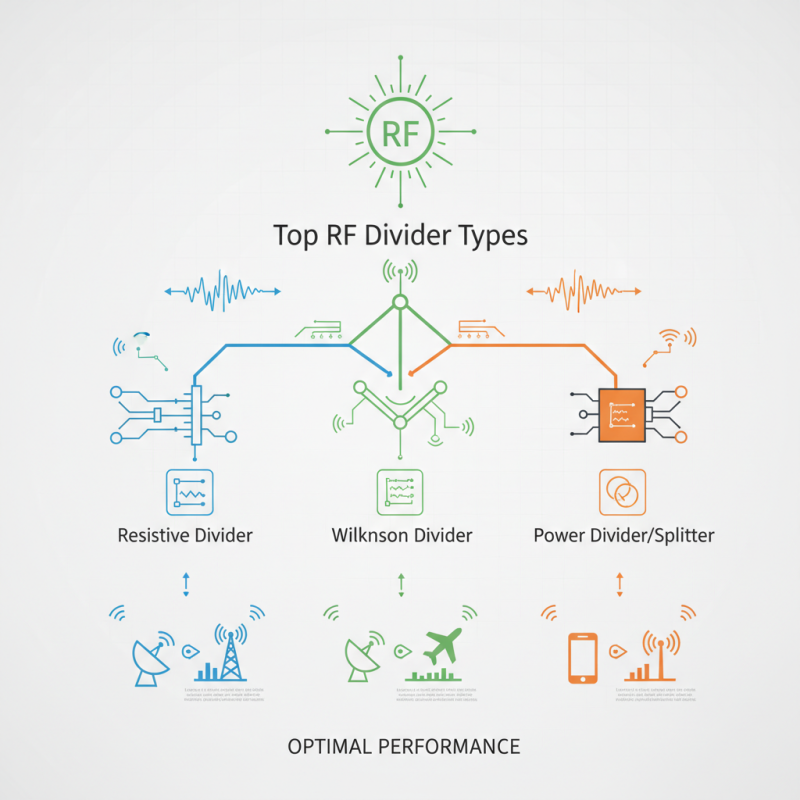
When it comes to optimizing RF systems, understanding the various types of Rf Dividers is crucial. These components are essential for distributing signal power across multiple outputs. The primary types of Rf Dividers include resistive dividers, reactive dividers, and hybrid dividers, each with distinct characteristics suited for different applications. For instance, resistive dividers are simple and effective for many low-frequency applications, while reactive dividers, such as Wilkinson dividers, are preferred for their efficiency and minimal signal loss. Hybrid dividers combine various techniques to enhance performance in diverse environments.

**Tips:** When selecting an Rf Divider, consider the frequency range you are working with to ensure compatibility. Additionally, evaluate the power handling capability to prevent any signal degradation. Lastly, it's beneficial to assess the isolation between output ports, which can greatly influence system performance, especially in sensitive applications.

Top RF Divider Types Performance Comparison

Passive vs. Active RF Dividers: Key Differences and Applications

When exploring Rf Dividers, understanding the distinction between passive and active types is crucial for optimizing performance in various applications. Passive Rf Dividers, such as resistive and Wilkinson dividers, are known for their simplicity and reliability. They typically introduce minimal signal distortion and have no additional noise, making them ideal for applications requiring high linearity. According to a recent report by MarketsandMarkets, passive Rf Dividers are projected to dominate the market due to their low cost and ease of integration, especially in consumer electronics where efficiency is key.

In contrast, active Rf Dividers utilize amplifiers to boost the power level of the divided signals. This makes them suitable for cases where maintaining signal strength is essential, such as in cellular base stations and high-frequency communication systems. A study by ResearchAndMarkets highlights that the demand for active Rf Dividers is growing, attributed to the increasing need for high-performance RF circuits in emerging technologies like 5G and IoT. The key takeaway is that while passive dividers excel in low-noise applications, active dividers are becoming essential for high-power scenarios, reflecting their importance in the evolving landscape of RF technology.

Performance Metrics for RF Dividers: What to Consider

When selecting Rf Dividers, several performance metrics are critical for optimizing their functionality. In addition to harmonic suppression and insertion loss, size plays a significant role in the design of microstrip Power Dividers. Recent innovations have leveraged hybrid design techniques to achieve significant size reduction without compromisingefficiency. For instance, the latest studies highlight the combination of microstrip and low-pass filters to enhance power distribution characteristics while minimizing physical dimensions, which is crucial for modern compact devices.


Another key measurement to consider is the insertion loss, which directly affects the overall efficiency of the RF divider. Research utilizing advanced optimization algorithms, such as particle swarm optimization (PSO), demonstrates that careful design can lead to remarkable reductions in insertion loss, often noted as a vital factor in enhancing system performance. Reports suggest that an efficient microstrip Wilkinson power divider can achieve insertion losses as low as 0.5 dB, ensuring better signal integrity in multi-port applications.


Furthermore, the trend towards integrating deep-learning techniques for the generalized inverse design of RF components signifies an exciting shift in the industry. By employing advanced computational methods, engineers can create more sophisticated multi-port RF dividers that are tuned for both millimeter-wave and terahertz applications, catering to the increasing demands of future wireless networks. These innovations not only enhance performance metrics but also pave the way for more versatile and efficient RF systems.

Common Applications of RF Dividers in Modern Technology

RF dividers play a critical role in various modern technological applications by enabling signal distribution and management in communication systems. One of the most significant areas where RF dividers are utilized is in wireless communication networks. According to a report from the International Telecommunication Union, global mobile data traffic reached 77 exabytes per month in 2022, underscoring the need for efficient signal distribution methods such as RF dividers. These components facilitate the distribution of signals from a single transmitter to multiple receivers, essential for supporting high-capacity networks and the increasing demand for mobile connectivity.

Another vital application of RF dividers is in radar and satellite communication systems. In these contexts, RF dividers help enhance the performance of phased array antennas by ensuring precise signal timing and phase control. Data from the Global Market Insights Report indicates that the radar market alone is expected to surpass $40 billion by 2026, with a significant portion relying on robust RF division techniques to operate efficiently. With the ongoing advancements in technology, the demand for high-performance RF dividers will only continue to escalate, making them indispensable in the evolution of modern communication infrastructures.

Design Considerations for Optimal RF Divider Performance

Top Rf Divider Types You Should Know for Optimal Performance

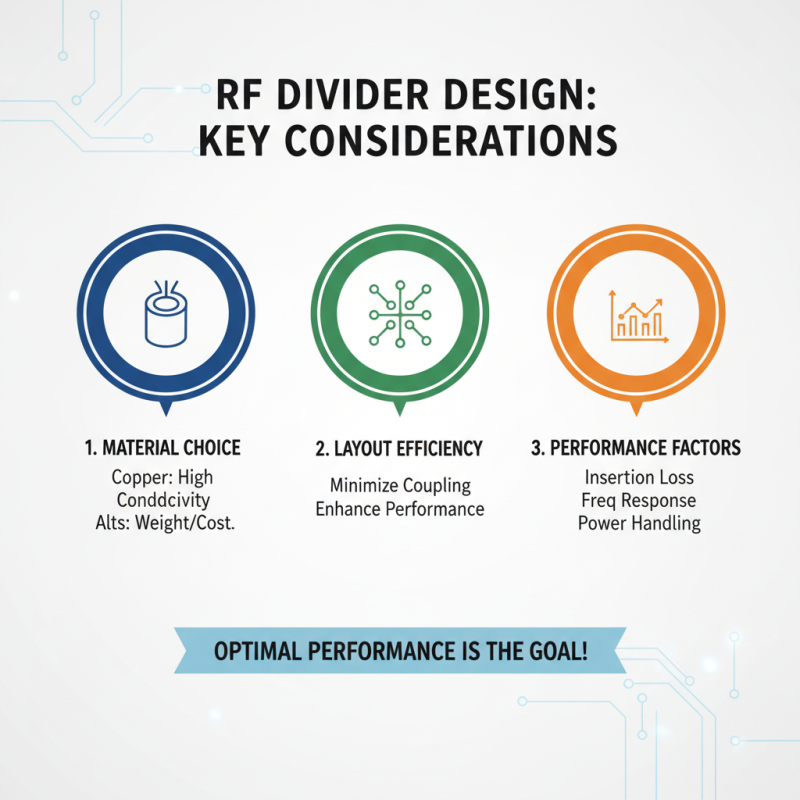
When designing RF dividers, several critical considerations must be taken into account to ensure optimal performance. The choice of material for the divider is paramount, as it can significantly influence factors like insertion loss, frequency response, and power handling. Copper is often preferred for its excellent conductivity, but constraints like weight and cost may lead designers to explore alternatives. Additionally, the layout of the RF divider is essential; an efficient layout can minimize unwanted coupling and crosstalk, ultimately enhancing performance.

**Tips:** Always simulate your RF divider circuit using software tools to analyze its behavior under various conditions. This approach can help identify potential issues before physical prototyping. Pay special attention to the impedance matching, as mismatches can lead to reflected power, adversely affecting signal integrity.

Another important consideration is the temperature stability of components used within the divider. Temperature variations can lead to drift in performance, so selecting components with minimal temperature coefficient is critical. Also, consider the environmental conditions the divider will be exposed to, as this will influence long-term reliability.

**Tips:** Use high-quality components rated for the expected temperature range, and implement thermal management techniques if necessary. This will help maintain consistent performance over the intended operational lifecycle.

Future Trends in RF Divider Technology and Their Impact

The future of RF divider technology is poised for significant evolution as advancements in artificial intelligence continue to influence the field. AI is becoming an essential tool that can streamline various engineering tasks, enhancing efficiency while allowing RF engineers to focus on more complex problem solving. According to industry reports, the global RF components market is expected to reach approximately $30 billion by 2025, emphasizing the necessity for innovation in RF dividers to meet growing demands.

Emerging trends in RF division technology indicate a shift towards integrated systems that combine high performance with reduced power consumption. The integration of machine learning algorithms into design processes allows engineers to optimize divider performance dynamically. For instance, studies have shown that incorporating AI-based simulations can lead to a 20% improvement in design accuracy. This synergy between human expertise and AI capabilities not only empowers RF engineers but also ensures that user requirements are met with precision and speed in an increasingly competitive market.

Optimizing Signal Distribution: The Benefits of the EDK8108-C055440 75Ω 2 Way-0° Power Divider for 5-1000MHz Applications

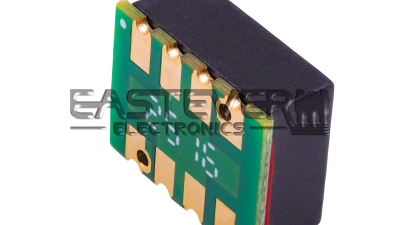
In the realm of RF technology, optimizing signal distribution is crucial for enhancing performance across various applications. The EDK8108-C055440 75Ω 2 Way-0° Power Divider stands out for 5-1000MHz applications, providing an efficient means of splitting signals while maintaining integrity. With its robust operating temperature range of -40°C to +85°C and storage capabilities between -55°C to +100°C, this power divider is engineered for reliability in diverse environments, supporting the stringent needs of modern telecommunication systems.

The EDK8108-C055440 finds its utility in critical areas such as DOCSIS 3.0 and 3.1 cable modems, wideband push-pull amplifiers, and CATV (Community Access Television) modules. It boasts a maximum input power of 1W and a peak DC current of 240mA, making it suitable for high-performance applications in VHF/UHF transmitters and optical receiver setups. According to industry reports, the demand for reliable signal distribution components is growing exponentially, driving innovations in design and efficiency. The adoption of these advanced power dividers can lead to significant improvements in system performance and overall signal clarity.

With RoHS compliance and lead-free materials, the EDK8108-C055440 not only meets but exceeds environmental standards, catering to a growing market for sustainable electronic solutions. This product exemplifies the evolution of signal processing technology, showcasing the industry's commitment to fostering an eco-friendly future while enhancing performance metrics in telecommunications and broadcasting sectors.

FAQS

: What are the main types of RF dividers?

: The primary types of RF dividers are resistive dividers, reactive dividers, and hybrid dividers, each suited to different applications.

What are the characteristics of resistive dividers?

Resistive dividers are simple and effective, making them suitable for many low-frequency applications.

Why are reactive dividers preferred in many cases?

Reactive dividers, such as Wilkinson dividers, are preferred for their efficiency and minimal signal loss.

What do hybrid dividers do?

Hybrid dividers combine various techniques to enhance performance in diverse environments.

What factors should be considered when selecting an RF divider?

It is important to consider the frequency range, power handling capability, and isolation between output ports when selecting an RF divider.

How is artificial intelligence impacting RF divider technology?

AI is streamlining engineering tasks, improving efficiency, and allowing RF engineers to focus more on complex problem-solving.

What is the expected growth of the RF components market?

The global RF components market is expected to reach approximately $30 billion by 2025.

What trends are emerging in RF divider technology?

There's a shift towards integrated systems that offer high performance while reducing power consumption, aided by machine learning algorithms.

How can AI-based simulations benefit RF divider design?

Incorporating AI-based simulations can lead to a 20% improvement in design accuracy.

How does the integration of AI and human expertise benefit RF engineering?

This integration empowers RF engineers to meet user requirements with precision and speed in a competitive market.

Conclusion

RF dividers play a crucial role in modern communication systems by distributing input signals into multiple outputs, thereby enhancing signal processing efficiency. Understanding the various types of RF dividers—ranging from passive to active—allows users to select the appropriate device based on application requirements. Key performance metrics such as isolation, amplitude balance, and phase balance are essential for assessing their effectiveness in diverse settings.

At Zhuhai Eastever Electronic Co., Ltd., our expertise lies in the development and production of high-quality RF components, including power splitters and RF dividers. With over a decade of experience, we are committed to advancing passive electronic components that optimize performance in technology applications. As RF divider technology evolves, staying informed about design considerations and future trends will be vital for achieving superior performance in communication systems.

Sophia

Sophia

Sophia is a dedicated marketing professional at Zhuhai Eastever Electronic Co., Ltd., where she has been instrumental in advancing the company's mission to lead the field of passive electronic components. With over a decade of experience, Sophia possesses an exceptional level of expertise in the......
Previous Understanding RF Transformers: Key Principles and Applications in Modern Technology