+86-15916242887 


In the fast-paced world of electronics these days, you can’t overlook just how important the Switching Transformerreally is. I remember Dr. Emily Harper, a real industry expert, once saying, "The future of efficient energy transfer is all about new ideas with Switching Transformers." As tech keeps moving forward, the demand for high-quality transformers that tick all the boxes is only growing.
Looking ahead to 2026, there are a bunch of standout OEM and ODM factories in the Switching Transformer game, and they’re seriously making waves. Companies like Transcore Solutions and Apex Power Systems are pushing boundaries with their innovative designs and improved features. They seem really committed not just to performance but also to staying eco-friendly and efficient — which is exactly what the industry is craving now.
Of course, it’s not all smooth sailing. There are some big hurdles, especially when it comes to quality control. Not every manufacturer can consistently deliver the top-notch standards that today’s demanding market expects. Some factories still struggle with keeping their production quality steady. That’s why it’s super important to do your homework before choosing an OEM or ODM partner in this space. Finding that balance between being innovative and ensuring quality is still a key challenge we all need to face.

Switching Transformers play a crucial role in modern electrical systems. These devices convert voltages and manage power flows. Their efficiency is paramount for industries striving for energy savingsand reliability. According to a recent market report, the global Switching Transformer market will reach over$10 billion by 2026, reflecting a significant growth trajectory.
The importance of these transformers cannot be overstated. They are essential in power supplies, industrial applications, and renewable energy systems. Reports suggest that innovations will drive demand, especially in electric vehicles and smart grids. However, the industry faces challenges. Quality control and manufacturing consistency remain areas needing improvement. Many factories struggle with waste and inefficiencies in production processes.
Additionally, while some factories have adopted automation, others lag behind. The inconsistency impacts overall performance and reliability. As the need for energy-efficient designs grows, factories must adapt. This transition poses risks but also offers opportunities for those willing to innovate and refine their processes. The path forward will likely involve significant investment and collaboration across the sector.
When exploring the landscape of OEM ODM Switching Transformer factories, several key characteristics stand out. These factories often emphasize flexibility in production. They adapt quickly to changing demands in the market. This responsiveness contributes to their competitiveness. Many utilize advanced technologies. However, not all factories achieve the same level of efficiency. Some struggle with outdated machinery, impacting their output quality.
Quality assurance is another critical aspect. Leading factories implement stringent testing protocols. They prioritize the reliability of their Switching Power Transformers. Nevertheless, inconsistencies in quality can emerge. Factories may face challenges in maintaining uniformity across batches. Transparency in operations is essential. Clients appreciate factories that can demonstrate their manufacturing processes transparently.
Collaboration with clients is vital. Factories need to understand specific requirements clearly. This partnership fosters innovation in design and functionality. However, communication issues can arise. Some factories fail to capture client feedback effectively. Overall, while many OEM ODM Switching Transformer factories show promise, continuous improvement remains essential for long-term success.
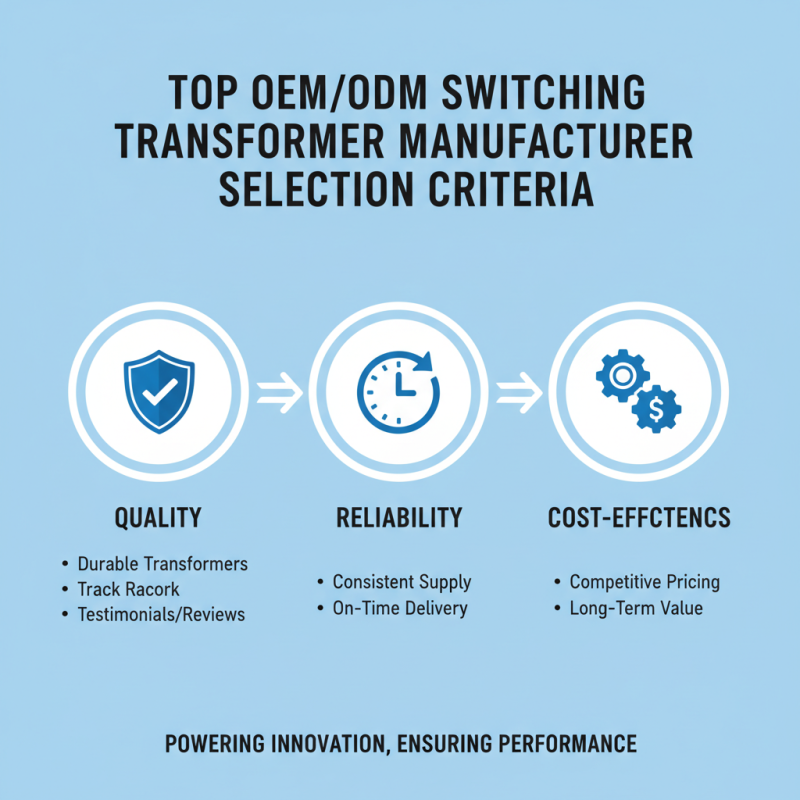
When selecting the top OEM ODM Switching Transformer manufacturers, several criteria should be considered. Quality is paramount. Look for factories with a strong track record in producing durable transformers. Check testimonials and reviews. Reliability in supply is equally important. A factory should consistently meet delivery deadlines.
Tips: Visit the factory if possible. This offers a chance to assess their equipment and workforce directly. It’s essential to see how they handle production. Transparency in processes helps build trust.
Innovation plays a key role too. The best manufacturers often invest in R&D. They adapt to market changes quickly. Look for companies that focus on energy efficiency. Rf Transformers, for example, are becoming more popular. This is due to their reliability and performance.
Also, consider customer service. A responsive team can address issues promptly. Communication can break down in international partnerships. Establishing a rapport with your chosen factory can prevent misunderstandings. Always have clear expectations before committing.
As we dive into the profiles of leading Switching Transformer factories in 2026, several key players emerge. These manufacturers are crucial in the electronic components sector. Data from market research indicates that the Switching Transformer market is projected to grow by 5.2% annually. This growth highlights the increasing demand for efficient power solutions.
When assessing factories, consider factors like production capacity and innovation. Many facilities are now adopting advanced technologies for enhanced productivity. The rise of IoT devices has also influenced transformer designs, pushing manufacturers to innovate. For instance, Lan Transformer technology is reshaping how power is managed in smaller devices. This can lead to significant energy savings.
Tips: Always evaluate a factory’s quality control standards. This ensures products meet industry benchmarks. Regular audits can reveal areas needing improvement. Not every factory excels in all aspects. Some may struggle with scalability or technology updates. Identify those challenges to make informed decisions. This proactive approach can lead to better supplier relationships.
The landscape of Switching Transformer manufacturing is evolving rapidly. Innovative technologies are at the forefront of this change. Many factories are exploring new methods to enhance efficiency and reduce costs. These advancements are crucial for meeting the growing demand for high-qualityPcb Transformers.
One notable trend is the use of automation in production lines. Automated systems can increase throughput while maintaining precision. However, challenges remain. Transitioning to fully automated processes may disrupt established workflows. Factories must balance innovation with operational integrity.
Moreover, the integration of smart technology is changing how manufacturers approach design. Data analytics helps in optimizing performance. Yet, reliance on technology can lead to overcomplexity. It's essential to maintain simplicity in design while embracing smart solutions. As factories evolve, the journey is as important as the destination.
| Factory Location | Annual Production Capacity | Key Technologies | Market Specialization | Sustainability Practices |
|---|---|---|---|---|
| East Asia | 5 million units/year | High-frequency operation | Consumer Electronics | Recycling of materials |
| North America | 4 million units/year | Magnetic core design | Industrial Applications | Energy-efficient practices |
| Europe | 3.5 million units/year | Integrated circuit technology | Telecommunication | Carbon footprint reduction |
| Southeast Asia | 6 million units/year | Automated winding | Renewable Energy Systems | Waste reduction initiatives |
| South America | 2 million units/year | Thermal management systems | Automotive | Sustainable sourcing |
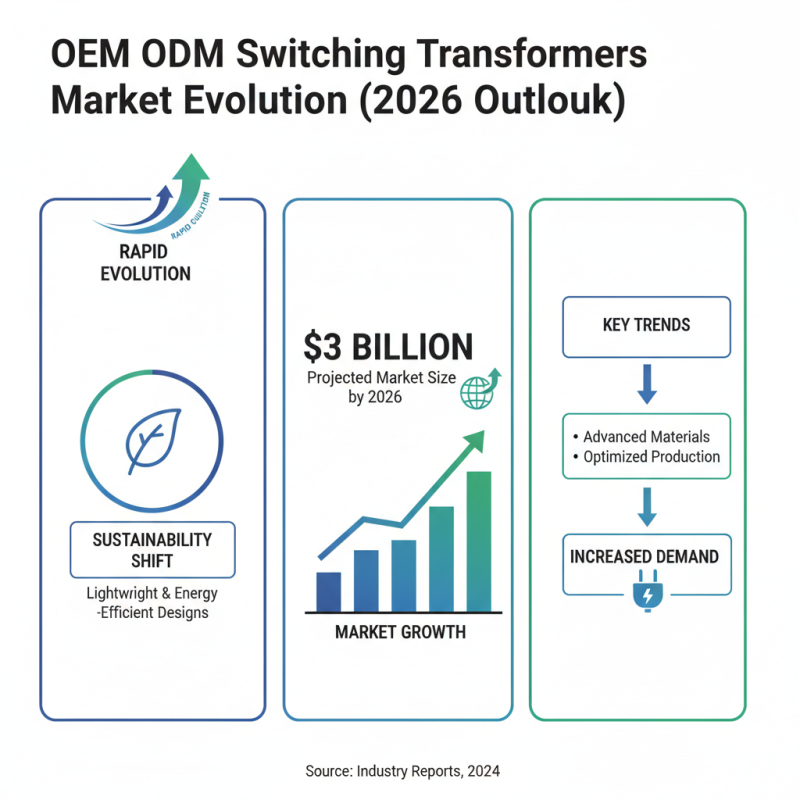
The market for OEM ODM Switching Transformers is evolving rapidly. Key trends are shaping production methods and materials. Industry reports indicate that demand for lightweight and energy-efficient transformers is anticipated to grow significantly. By 2026, the market size is projected to reach $3 billion, highlighting a shift towards sustainability.
Material innovation is crucial. Manufacturers are increasingly using advanced composites to improve efficiency. This shift directly responds to the rising energy costs and regulatory pressures for greener solutions. The need for minute, precise designs is greater than ever. Reports suggest a 40% increase in investments towards R&D in this sector.
Another trend worth noting is the automation of production. Factories now deploy AI and robotics to enhance production speed and reduce errors. However, reliance on technology also poses risks. Cybersecurity threats are on the rise. Manufacturers must invest as much in digital security as in physical production capabilities. Balancing innovation and risk poses a significant challenge for the industry.
The outlook for switching transformer manufacturers in 2026 shows promising growth. As technology evolves, the demand for efficient power management solutions increases. Manufacturers must innovate to stay competitive. Sustainability also plays a key role. Companies are expected to adopt greener practices in their operations.
Tips: Embrace flexibility. The market can change quickly. Staying adaptable helps manufacturers respond to new trends. Focus on quality. Cutting corners can lead to long-term issues. Prioritize reliability in your designs.
With advancements in material science, manufacturers can produce lighter and more efficient transformers. However, sourcing high-quality materials remains a challenge. Many companies struggle with this aspect. Balancing cost and quality is critical for success. Continuous training is essential for staff to keep pace with these changes. The workforce needs to embrace new technologies as well.
Tips: Think about the end-user. Designing for usability can set a product apart. Engage with customers to understand their needs better. Collaborate with innovation partners. This can spark new ideas and products in the ever-evolving landscape.
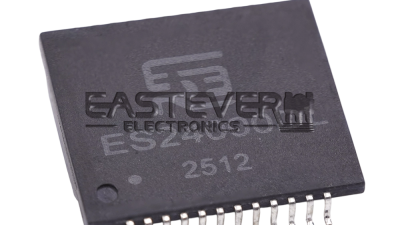
The 100/1000BASE-T PG88402PG RJ45 to RJ11 LAN transformers serve as a vital component in enhancing network connectivity across various applications. Their compatibility with 260°C reflow processes ensures ease of integration into modern devices, making them an excellent choice for manufacturers seeking reliability and performance. With a broad operating temperature range from -40°C to +125°C, these transformers can function effectively in demanding environments, ensuring uninterrupted communication for critical systems.
In addition to their robust design, these transformers are well-suited for a wide array of applications, including solar inverters and industrial automation. They facilitate seamless communication in process control systems and can be integrated into medical equipment and AC motor drives. Furthermore, their use in isolated gate driver power supplies and uninterruptible power supplies (UPS) highlights their versatility in ensuring stable power delivery and signal integrity across various platforms. By mitigating signal distortion and enhancing data integrity, the PG88402PG transformers are a key enabler for modern high-speed networks, paving the way for enhanced connectivity and operational efficiency.
: The article provides useful information on various topics.
While the content is credible, some details may need verification.
Engage with supplementary resources for deeper insights.
Yes, but they may not suit everyone's situation.
It's okay to have different opinions; reflection is important.
Key points are present, but they might need personal interpretation.
Not all details will apply to every individual or context.
Updates are irregular, leading to possible outdated information.
Report them for improvement; collective contributions help.
The article titled "2026 Top OEM ODM Switching Transformer Factories to Watch?" provides a comprehensive overview of switching transformers, highlighting their significant role in various industries. It emphasizes the key characteristics that define top OEM and ODM switching transformer manufacturers, such as quality, innovation, and reliability. The criteria for selecting leading factories are explored, alongside profiles of prominent manufacturers anticipated to lead the market in 2026.
Additionally, the article addresses innovative technologies shaping the production of switching transformers, as well as market trends that are influencing manufacturing practices. With an eye on the future, it discusses the prospects for switching transformer manufacturers and how they are positioned to adapt to emerging challenges and opportunities in the ever-evolving market landscape.